Advocacy for integration of clubfoot treatment into national health services – why does it matter and how will we do it?
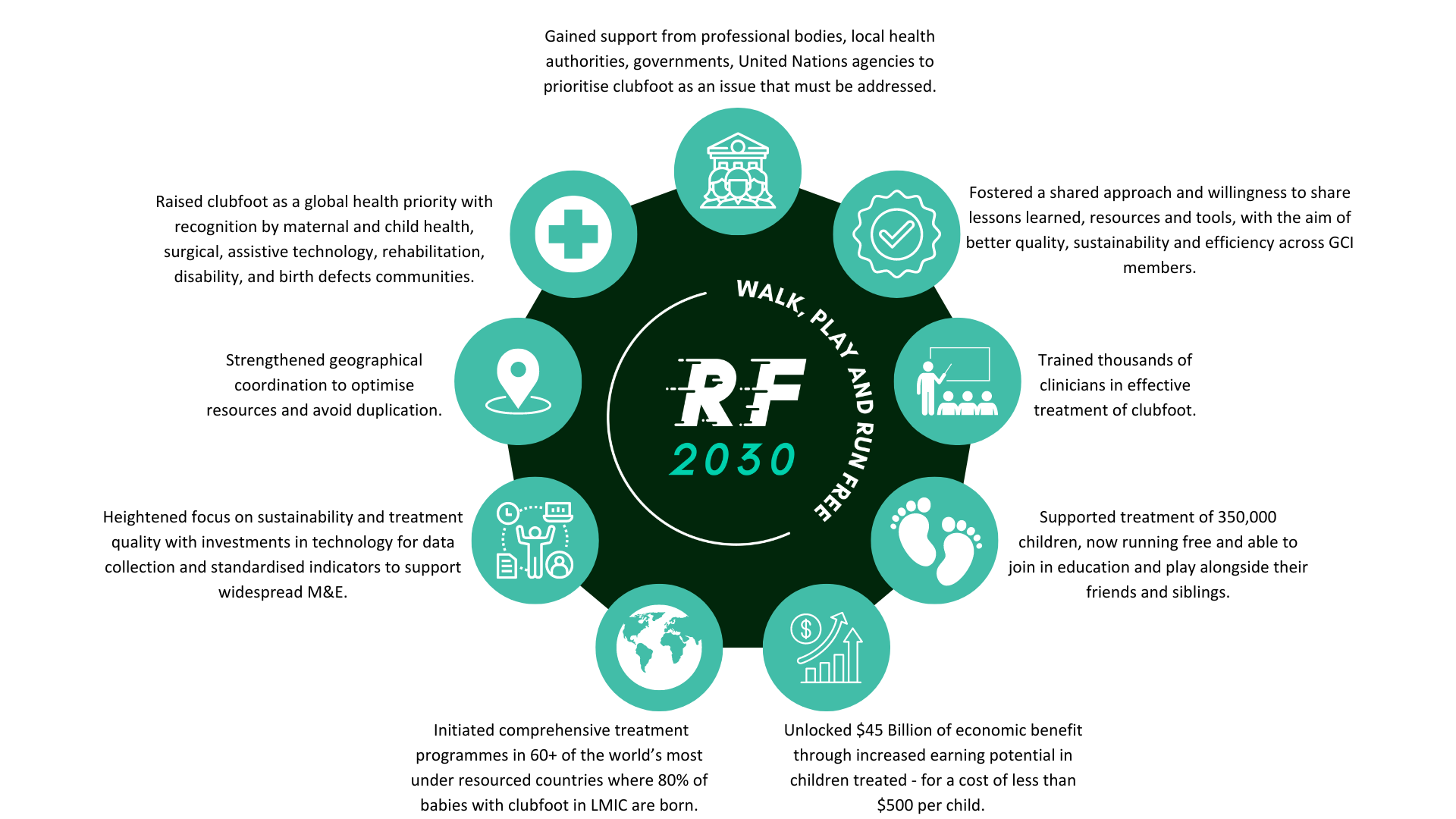
Raising awareness of clubfoot at the highest levels of global health through global clubfoot data research and publication, conference presentations and collaborating with the United Nations and World Health Organisation on priority setting and framework development are all effective ways to build top-down momentum for prioritising clubfoot treatment. As a global convenor of NGOs and experts working with clubfoot, we are uniquely positioned to represent, and advocate for, the clubfoot community at these levels. When policy makers are educated about the burden of disability caused by untreated clubfoot and the relatively simple, cost effective, and proven set of interventions needed to address it at population level (laid out in our RunFree2030 strategy) this creates a compelling case for prioritisation of clubfoot. The impact of this in the countries where our members work is that policies present clubfoot as a condition which is feasible to address at population level and which therefore must be prioritised as health service planning and delivery are organised.
In working with global health institutions and raising awareness through participation in their initiatives, publications and conference presentations, we have learned that these types of advocacy are very important but can take a long time – even years – to show tangible results. They also require far more than just the initial communication effort to produce change on the ground. Extensive networking, follow up and ‘ground up’ advocacy are required for high level goals to produce results in local implementation.
Through the RunFree Accelerator, we will develop and run a series of advocacy workshops with our country-level member NGO’s, to enable and empower them with knowledge and skills for local advocacy around top down initiatives that could influence clubfoot treatment.